Listen to a sample
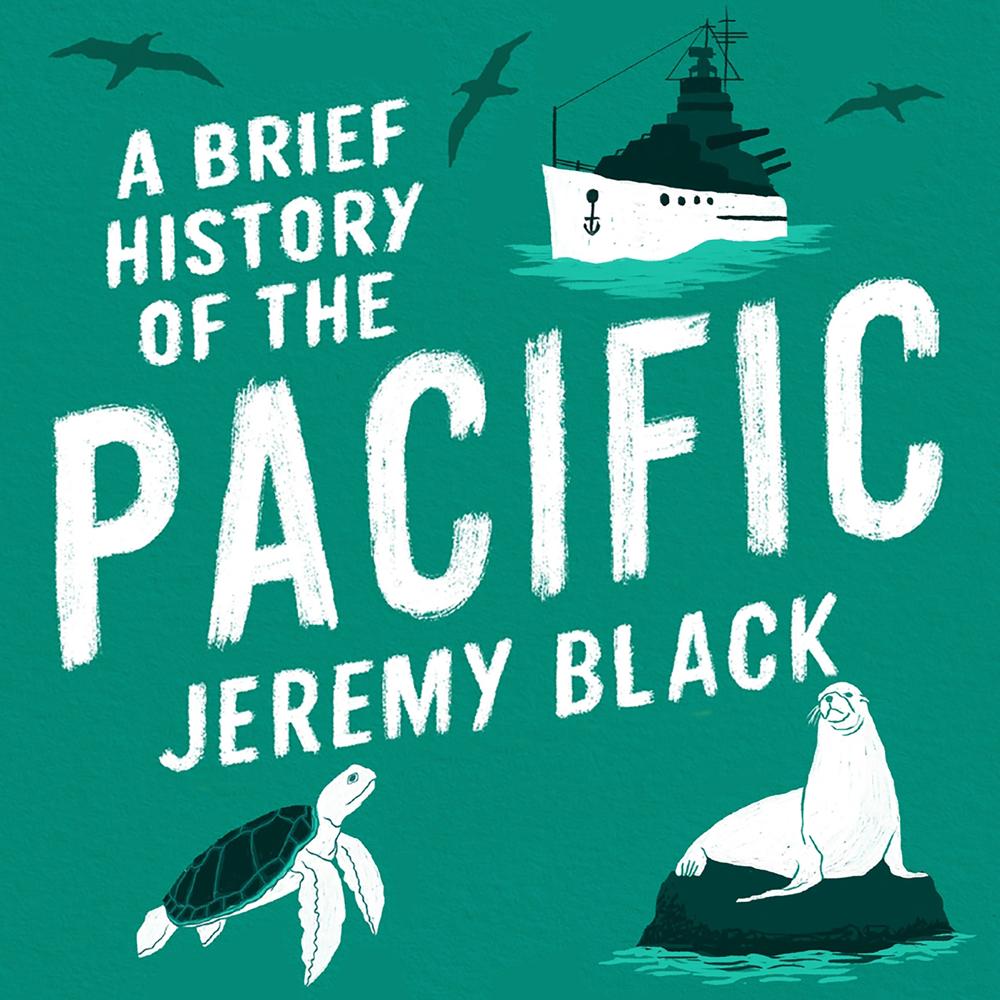
A Brief History of the Pacific
Brief Histories (Related to this series)
- Author
- Jeremy Black
- Narrator
- Roger Davis
- Publisher
- Little, Brown Book Group
- Publish Date
- 7 September 2023
- Run Time
- 9 hours 16 minutes
- Format
- Audiobook
What to expect
There is also an emphasis on the very different physical and human environments of the four quadrants of the Pacific - the north-east, the north-west, the south-east and the south-west - and of the 'coastal' islands, that is the Aleutians, Japan and New Zealand, and continental coastlines. The focus is always on the interactions of Japan, California, Peru, Australia and other territories with the ocean, notably in terms of trade, migration and fishing.
Black looks first at the geology, currents, winds and physical make-up of the Pacific, then the region's indigenous inhabitants to 1520. He describes the Pacific before the arrival of Europeans, its history of settlement, navigation methods and religious practices.
From Easter Island, the focus shifts to European voyages, from Magellan to Cook and Tasman, the problems they faced, not least the sheer scale of the ocean. Black looks at the impact of these voyages on local people, including the Russians in the Aleutian Islands.
Outside control of the region grew from 1788 to 1898. The British laid claim to Australia and America to the Phillipines. Western economic and political impact manifested in sandalwood and gold rushes, and the coming of steamships accelerated this impact.
Territorial claims spread through Willis, Perry and the Americans, including to Hawaii. Black looks at the Maori wars in New Zealand and the War of the Pacific on the South American coast. Christian missionary activity increased, and Gaugin offered a different vision of the Pacific.
1899 to 1945 marked the struggle of empires: the rise of Japan as an oceanic power, and the Second World War in the Pacific as a critical moment in world history.
Oil-powered ships ushered in the American Age, from 1945 to 2015, bringing the end of the British Pacific. France had a continued role, in Tahiti and New Caledonia, but America had become the dominant presence. Black explores the political, economic and cultural impacts of, for example, Polynesians attending universities in America and Australasia; the spread of rugby; and relatively little international tension, although some domestic pressures remained, including instability in Papua New Guinea and Fiji.
The book ends with a look at the Pacific's future: pressures from industrial fishing, pollution and climate change; the rise of drug smuggling; greater Chinese influence leading to conflict with America and Australasia - the Pacific is once again on the frontline of military planning. But the Pacific's future also includes tourism, from Acapulco to Hawaii, and from Tahiti to Cairns.
Critics Review
-
Praise for Jeremy Black's The Holocaust: A demanding but important work.
R. S. Levy, University of Illinois at Chicago
-
Praise for Jeremy Black's Insurgency and Counterinsurgency: A Global History: A significant and timely contribution to understanding the new meaning of war.
Choice
User Reviews
No reviews yet.
Details
- Author
- Jeremy Black
- Narrator
- Roger Davis
- Duration
- 9 hours 16 minutes
- Release Date
- 7 September 2023
- ISBN
- 9781405551359
- Format
- Audiobook
- Publisher
- Little, Brown Book Group
- Genre
- General and world history
Synopsis
This brilliantly concise history of the Pacific Ocean nevertheless succeeds in examining both the indigenous presence on ocean's islands and Western control or influence over the its islands and shores. There is a particular focus on the period from the 1530s to 1890 with its greater Western coastal and oceanic presence in the Pacific, beginning with the Spanish takeover of the coasts of modern Central America, Colombia, Ecuador and Peru, and continuing with the Spaniards in the Philippines. There is also an emphasis on the very different physical and human environments of the four quadrants of the Pacific - the north-east, the north-west, the south-east and the south-west - and of the 'coastal' islands, that is the Aleutians, Japan and New Zealand, and continental coastlines. The focus is always on the interactions of Japan, California, Peru, Australia and other territories with the ocean, notably in terms of trade, migration and fishing.Black looks first at the geology, currents, winds and physical make-up of the Pacific, then the region's indigenous inhabitants to 1520. He describes the Pacific before the arrival of Europeans, its history of settlement, navigation methods and religious practices.From Easter Island, the focus shifts to European voyages, from Magellan to Cook and Tasman, the problems they faced, not least the sheer scale of the ocean. Black looks at the impact of these voyages on local people, including the Russians in the Aleutian Islands. Outside control of the region grew from 1788 to 1898. The British laid claim to Australia and America to the Phillipines. Western economic and political impact manifested in sandalwood and gold rushes, and the coming of steamships accelerated this impact. Territorial claims spread through Willis, Perry and the Americans, including to Hawaii. Black looks at the Maori wars in New Zealand and the War of the Pacific on the South American coast. Christian missionary activity increased, and Gaugin offered a different vision of the Pacific. 1899 to 1945 marked the struggle of empires: the rise of Japan as an oceanic power, and the Second World War in the Pacific as a critical moment in world history. Oil-powered ships ushered in the American Age, from 1945 to 2015, bringing the end of the British Pacific. France had a continued role, in Tahiti and New Caledonia, but America had become the dominant presence. Black explores the political, economic and cultural impacts of, for example, Polynesians attending universities in America and Australasia; the spread of rugby; and relatively little international tension, although some domestic pressures remained, including instability in Papua New Guinea and Fiji. The book ends with a look at the Pacific's future: pressures from industrial fishing, pollution and climate change; the rise of drug smuggling; greater Chinese influence leading to conflict with America and Australasia - the Pacific is once again on the frontline of military planning. But the Pacific's future also includes tourism, from Acapulco to Hawaii, and from Tahiti to Cairns.




About xigxag
xigxag is an independent, UK-based audiobook platform and the UK's only B Corp certified audiobook company. We offer nearly 150,000 audiobooks, all with professional human narration. No AI-generated voices. xigxag is rated an Ethical Consumer Best Buy for audiobooks and a top-rated ethical bookshop.
There is no subscription. You buy the audiobooks you want, you own them permanently, and prices start at $13.95. The more you listen over the year, the less you pay per book, and there is always a selection in Listen for Less from $7.95. You can also send audiobooks as gifts using our audiobook gift cards or in-app gifting.
Every audiobook on xigxag has honest reviews covering both the book and the narration, and our community features make it easy to share what you are listening to, discover what others recommend, and find your next listen.
Download or stream on iOS, Android, or in your browser. Browse the full catalogue at xigxag.co.uk.