Listen to a sample
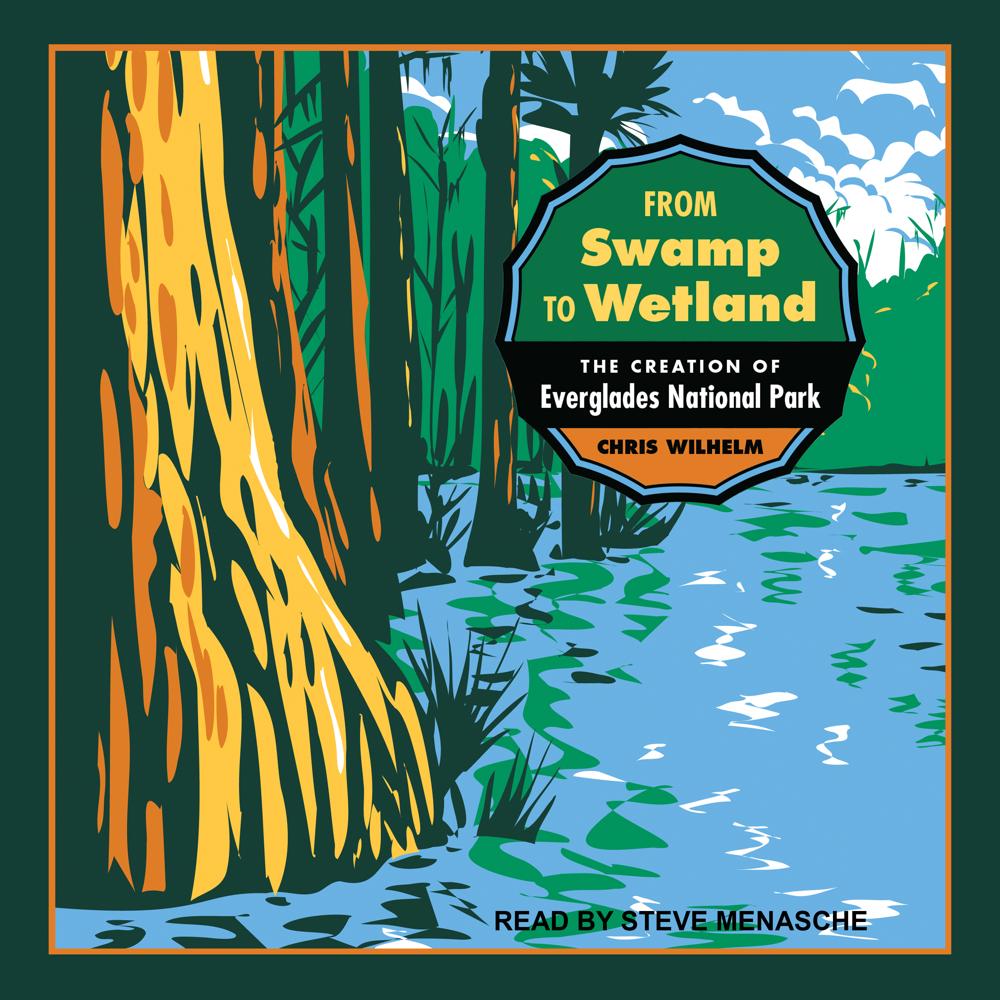
From Swamp to Wetland
- Author
- Chris Wilhelm
- Narrator
- Steve Menasche
- Publisher
- Tantor Media, Inc
- Publish Date
- 16 August 2022
- Run Time
- 11 hours 40 minutes
- Format
- Audiobook
What to expect
Park advocates drew on new ideas concerning the value of biota and ecology, the importance of wilderness, and the need to protect habitats, marine ecosystems, and plant life to redefine the Everglades. Using these ideas, the Everglades began to be recognized as an ecologically valuable and fragile wetland—and thus a region in need of protective status.
While these new ideas foreshadowed the later emergence of modern environmentalism, tourism and the economic desires of Florida's business and political elites also impacted the park's future. These groups saw the Everglades' unique biology and ecology as a foundation on which to build a tourism empire.
Yet, even after the park's creation, conservative landowners successfully fought to limit the park and saw it as a threat to their own economic freedoms. The battle to save the swamp's biodiversity continues, and Everglades Park stands at the center of ongoing restoration efforts.
User Reviews
No reviews yet.
Details
- Author
- Chris Wilhelm
- Narrator
- Steve Menasche
- Duration
- 11 hours 40 minutes
- Release Date
- 16 August 2022
- ISBN
- 9798765029947
- Format
- Audiobook
- Publisher
- Tantor Media, Inc
- Genre
- Nature and the natural world: general interest, History of the Americas, Local history, Travel and holiday, Conservation of the environment, The Earth: natural history: general interest, Rivers and lakes
Synopsis
This book chronicles the creation of Everglades National Park, the largest subtropical wilderness in the United States. Prior to the park's creation, the Everglades was seen as a reviled and useless swamp, unfit for typical recreational or development projects.Park advocates drew on new ideas concerning the value of biota and ecology, the importance of wilderness, and the need to protect habitats, marine ecosystems, and plant life to redefine the Everglades. Using these ideas, the Everglades began to be recognized as an ecologically valuable and fragile wetland—and thus a region in need of protective status.While these new ideas foreshadowed the later emergence of modern environmentalism, tourism and the economic desires of Florida's business and political elites also impacted the park's future. These groups saw the Everglades' unique biology and ecology as a foundation on which to build a tourism empire.Yet, even after the park's creation, conservative landowners successfully fought to limit the park and saw it as a threat to their own economic freedoms. The battle to save the swamp's biodiversity continues, and Everglades Park stands at the center of ongoing restoration efforts.





About xigxag
xigxag is an independent, UK-based audiobook platform and the UK's only B Corp certified audiobook company. We offer nearly 150,000 audiobooks, all with professional human narration. No AI-generated voices. xigxag is rated an Ethical Consumer Best Buy for audiobooks and a top-rated ethical bookshop.
There is no subscription. You buy the audiobooks you want, you own them permanently, and prices start at $13.95. The more you listen over the year, the less you pay per book, and there is always a selection in Listen for Less from $7.95. You can also send audiobooks as gifts using our audiobook gift cards or in-app gifting.
Every audiobook on xigxag has honest reviews covering both the book and the narration, and our community features make it easy to share what you are listening to, discover what others recommend, and find your next listen.
Download or stream on iOS, Android, or in your browser. Browse the full catalogue at xigxag.co.uk.