Listen to a sample
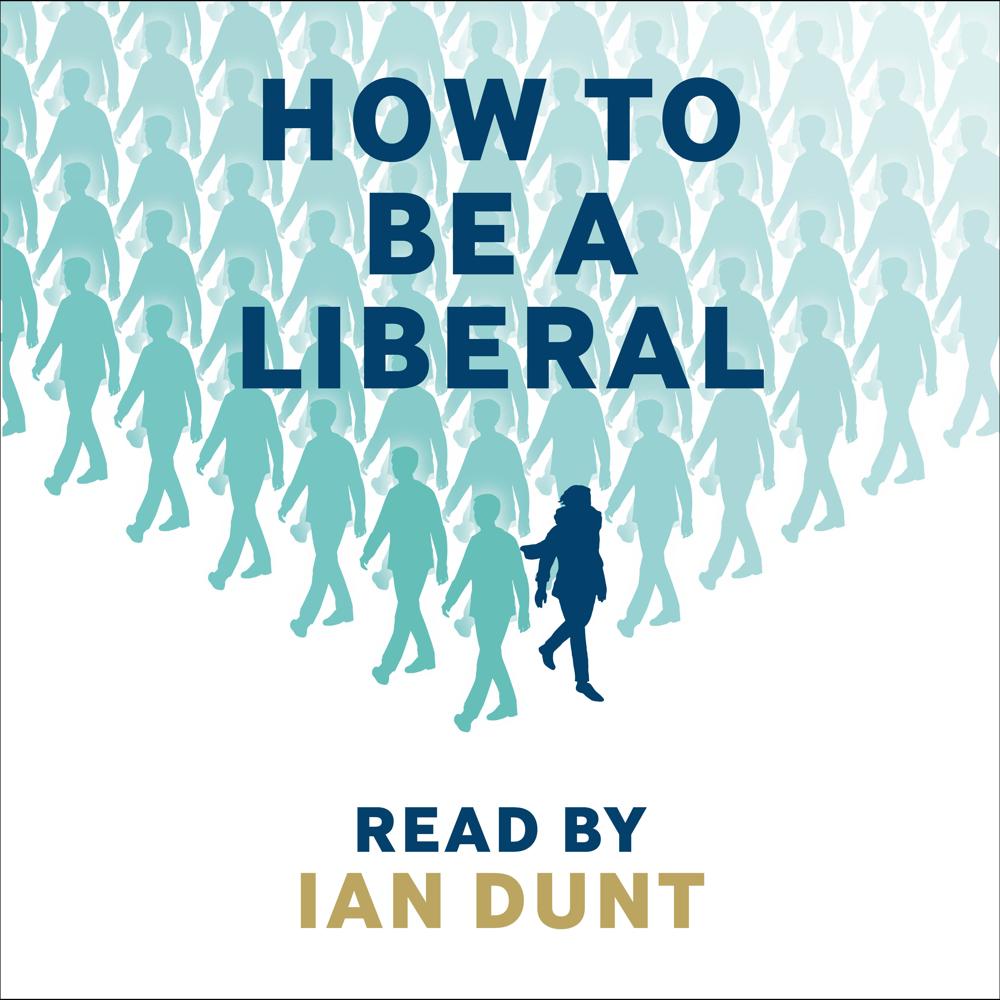
How To Be A Liberal
What to expect
The fightback against populism begins with this work explaining liberal values
'Required reading for anyone interested in politics and philosophy' – Prospect magazine
How To Be A Liberal is a bracing, beautifully written history of liberalism — and a practical defence of liberal democracy in an era of nationalism, culture wars, and post‑truth politics.
Political journalist Ian Dunt (author of How Westminster Works and co‑presenter of the Origin Stories podcast) takes you from the scientific revolution to the present day, tracing how the idea of individual freedom became the most radical programme in modern politics. Along the way you'll meet rebels, philosophers, campaigners, and iconoclasts — and see why liberalism still matters to anyone who cares about human rights, reason, and a plural society.
Dunt begins where our current crisis starts: the rise of nationalism and its seductive simplifications — attacks on institutions, diversity, and even the possibility of objective truth. He shows how liberalism answers those pressures: by insisting that people are individuals before they are tribes, by defending free enquiry and evidence, and by protecting the space each person needs to live, love, and think as they choose.
Inside you'll find:
- A compelling narrative history of liberal thought—from Descartes and the birth of modern reason, through revolutionary arguments about rights and consent, to the debates that shaped the modern world.
- A clear explanation of liberalism's core principles: individual liberty, equal rights, democratic restraint, and the institutions that keep power accountable.
- A modern guide to today's conflicts—identity politics, anti‑truth, and the new nationalism—and what a renewed, radical liberalism could look like.
Whether you're a student of political philosophy, a reader of the history of ideas, or simply looking for a sharper way to understand liberalism and liberal democracy, How To Be A Liberal is an essential, hopeful book: a reminder that freedom is not a slogan, but a practice—and that it begins with the individual.
Reviews
'A tour de force; a mighty trumpet blast for the forces of liberalism and enlightenment in the face of a global tide of ignorance and populism.' – The Secret Barrister
'This is a history of ideas as it should be written – brilliant, vivid storytelling about the people who shaped liberalism, the challenges it has faced over the centuries, its commitment to the truth and why it's now more important than ever to defend it.' – Caroline Lucas MP
' How To Be A Liberal is required reading for today's political debates.' – Anne Applebaum, Twilight of Democracy
'I'm loving How to be a Liberal. It's really great. I mean breathtakingly good. Bravo.' – Dr Ben Goldacre
About the Author
Ian Dunt is a journalist, newspaper columnist and co-presents the
Origin Story podcast.
His first book,
Brexit: What the Hell Happens Now? (Canbury Press, 2017), about Britain's challenge in leaving the European Union, was a bestseller.
In How To Be A Liberal (Canbury, 2020), he tells the epic story of personal freedom, with panache and a panoramic sweep.
Buy the book and start reading
Critics Review
-
How to be a Liberal is a non-exhaustive (by Dunt's own admission) but thorough exploration of liberalism's journey from early thinkers such as Rene Descartes and Benjamin Constant all the way through to 21st century liberalism and the urgent crisis it now faces in its battle with nationalism and populism. The beauty of this book not only stems from the intrinsic beauty of the ideals of liberalism, but from Dunt's presentation of the logical progression of the history of ideas in a way that makes this book accessible to anyone who wishes to apply liberal principles to the rather mad world in which we currently live... As one moves through the book, Dunt's political philosophy becomes increasingly clear. His ability to write on issues of the day was clear before this book, but when this is combined with the intellectual force of the previous chapters, the final chapters become a devastating polemic of the current success of nationalism across Europe and America. Targets of this polemic include Viktor Orban, Boris Johnson and the pushers of identity politics. His criticism of both nationalists and those who play the game of identity politics is fundamentally the same – they reject the importance of the individual and instead rely on homogenous and rigid assumptions about the nature of particular groups (in spite of the good intentions of those on the left). These assumptions fail to consider the complexity of human relationships and thus, according to Dunt, ultimately fail. There is also pointed, and perhaps surprising given Dunt's political history, criticism of the EU. One gets the sense that this criticism stems from Dunt's disappointment at the EU in failing to stand up to nationalism (Libyan refugee crisis and Hungary) and the institutionally liberal principles upon which it was created (Eurozone Crisis). This book is an urgent restatement of principles that have been missing from political discourse in the UK, Europe and the USA over the last few decades. At the heart of these principles is the importance of individual liberty and how all rights flow from this. Although the picture may not currently be overly bright, Dunt strikes a fundamentally optimistic tone about the strength of institutional politics (particularly in the UK) and the ability to push back against the dark wave of nationalism currently flooding through Europe. Essential reading.
The Day Today
-
Dunt, editor of the website politics.co.uk, counterposes liberalism and nationalism, the latter of which, he writes, is based on a sixfold lie. Among its elements are the thought that we can have only one identity at a time, which makes us "part of the mass: an undifferentiated component of the whole," and the contention that any difference from that mass is bad. We see the sixth component, "there is no such thing as truth," enacted with every Trump tweet. As Orwell knew, when politicians can get away with lies, lie they will; if the concepts of truth and falsehood disappear, then they will do as they please. Having established this sixfold premise, Dunt examines the evolution of the idea of liberalism, at least some of which he traces back to Descartes and his obsession with the "gap between dream and reality, the thin line between being awake and…the crazed world of dreaming"—i.e., the foundational stuff of truth and lies. While Descartes is seldom pressed into political work, Dunt makes a good case for doing so. Other figures in the battle against authoritarianism include some of the usual suspects, such as John Locke and John Stuart Mill—who was careful to give credit to his partner, Harriet Taylor, a woman who even so "was erased" from the historical record. The paucity of intellectualism on the far right, an ideology "pumped into the heart and pursued with the fist," is as evident now as it was a century ago. In a book that makes a good companion to Adam Gopnik's A Thousand Small Sanities, Dunt takes down a few politically correct absurdities, but most of his fire is aimed squarely at Trump, Theresa May, Marine Le Pen, and other enemies of freedom. When in the course of human events it falls on us to resist, this makes a welcome guidebook.
Kirkus Reviews
-
Ian Dunt's ambitious new book, How To Be a Liberal, takes the reader on a whirlwind tour of the historical movements, ideas and philosophies that make up this venerable political tradition. From René Descartes to John Stuart Mill and Isaiah Berlin, from the English Civil War to the American Revolution and modern globalisation, Dunt comments on what he argues are the key moments in the development of that "beautiful and world-changing idea, of individual freedom." At times, there appears to be a disconnect in the book between its ostensible subject matter—"liberalism"—and, for example, Dunt's lengthy explanation of the origins of the 2008 banking crash and the subprime mortgage crisis. That sometimes makes for an incongruous mix. The most compelling chapters are those that step away from the chronological narrative, charting the dawn of the age of science through to Trump and Brexit, and analyse particular aspects of liberalism. The chapter on current battles over identity offers a brilliant overview of tricky turf for liberals. A journalist who has come to prominence on Twitter as a staunch critic of Brexit, Dunt has delved into heavy academic theory and interpreted it in an accessible manner for the ordinary reader. He describes liberalism as "an enormous, boisterous, confounding bloody thing," and writes passionately in its favour, as a counterweight to ignorance and populism. This book is required reading for anyone interested in politics and philosophy.
Prospect
User Reviews
No reviews yet.
Details
- Author
- Ian Dunt
- Narrator
- Ian Dunt
- Duration
- 14 hours 29 minutes
- Release Date
- 2 October 2020
- ISBN
- 9781912454433
- Format
- Audiobook
- Publisher
- Canbury Press Ltd
- Genre
- Politics and government, History of ideas
Synopsis
The fightback against populism begins with this work explaining liberal values 'Required reading for anyone interested in politics and philosophy' – Prospect magazine How To Be A Liberal is a bracing, beautifully written history of liberalism — and a practical defence of liberal democracy in an era of nationalism, culture wars, and post‑truth politics. Political journalist Ian Dunt (author of How Westminster Works and co‑presenter of the Origin Stories podcast) takes you from the scientific revolution to the present day, tracing how the idea of individual freedom became the most radical programme in modern politics. Along the way you'll meet rebels, philosophers, campaigners, and iconoclasts — and see why liberalism still matters to anyone who cares about human rights, reason, and a plural society. Dunt begins where our current crisis starts: the rise of nationalism and its seductive simplifications — attacks on institutions, diversity, and even the possibility of objective truth. He shows how liberalism answers those pressures: by insisting that people are individuals before they are tribes, by defending free enquiry and evidence, and by protecting the space each person needs to live, love, and think as they choose. Inside you'll find: A compelling narrative history of liberal thought—from Descartes and the birth of modern reason, through revolutionary arguments about rights and consent, to the debates that shaped the modern world. A clear explanation of liberalism's core principles: individual liberty, equal rights, democratic restraint, and the institutions that keep power accountable. A modern guide to today's conflicts—identity politics, anti‑truth, and the new nationalism—and what a renewed, radical liberalism could look like. Whether you're a student of political philosophy, a reader of the history of ideas, or simply looking for a sharper way to understand liberalism and liberal democracy, How To Be A Liberal is an essential, hopeful book: a reminder that freedom is not a slogan, but a practice—and that it begins with the individual. Reviews 'A tour de force; a mighty trumpet blast for the forces of liberalism and enlightenment in the face of a global tide of ignorance and populism.' – The Secret Barrister 'This is a history of ideas as it should be written – brilliant, vivid storytelling about the people who shaped liberalism, the challenges it has faced over the centuries, its commitment to the truth and why it's now more important than ever to defend it.' – Caroline Lucas MP ' How To Be A Liberal is required reading for today's political debates.' – Anne Applebaum, Twilight of Democracy 'I'm loving How to be a Liberal. It's really great. I mean breathtakingly good. Bravo.' – Dr Ben Goldacre About the Author Ian Dunt is a journalist, newspaper columnist and co-presents the Origin Story podcast. His first book, Brexit: What the Hell Happens Now? (Canbury Press, 2017), about Britain's challenge in leaving the European Union, was a bestseller. In How To Be A Liberal (Canbury, 2020), he tells the epic story of personal freedom, with panache and a panoramic sweep. Buy the book and start reading


About xigxag
xigxag is an independent, UK-based audiobook platform and the UK's only B Corp certified audiobook company. We offer nearly 150,000 audiobooks, all with professional human narration. No AI-generated voices. xigxag is rated an Ethical Consumer Best Buy for audiobooks and a top-rated ethical bookshop.
There is no subscription. You buy the audiobooks you want, you own them permanently, and prices start at $13.95. The more you listen over the year, the less you pay per book, and there is always a selection in Listen for Less from $7.95. You can also send audiobooks as gifts using our audiobook gift cards or in-app gifting.
Every audiobook on xigxag has honest reviews covering both the book and the narration, and our community features make it easy to share what you are listening to, discover what others recommend, and find your next listen.
Download or stream on iOS, Android, or in your browser. Browse the full catalogue at xigxag.co.uk.